
Florida is a favourite winter destination for Canadians, and this year it comes with a mosquito warning. According to the Associated Press, Florida’s dengue outbreak is now the largest in the continental United States in decades, with more than 250 locally acquired cases reported so far in 2026.
(more…)Category: Bug-Borne Illness
Understanding Tularemia (“Rabbit Fever”): What You Need to Know About This Emerging Tick-Borne Disease
Recent reports of suspected tularemia cases in New York have brought renewed attention to tick-borne infections beyond the more commonly discussed Lyme disease. Often referred to as “rabbit fever,” tularemia is a rare but potentially serious bacterial infection that highlights the importance of year-round vigilance, proper tick prevention, and early clinical awareness.
While cases remain relatively rare, tick populations and geographical ranges have been shifting across North America due to milder winters and changing environmental patterns. Understanding how tularemia spreads, recognizing its symptoms, and knowing when to seek medical care are essential steps in keeping yourself and your family safe while enjoying the outdoors.
What Is Tularemia?
Tularemia is a zoonotic disease caused by the bacterium Francisella tularensis. The common name “rabbit fever” stems from its frequent association with wild lagomorphs (rabbits and hares) and rodents, which serve as natural reservoirs for the bacteria.
Unlike many other vector-borne illnesses that are transmitted strictly by a single mechanism, F. tularensis is remarkably versatile. Human transmission can occur through several distinct pathways:
- Vector bites. Bites from infected ticks — most notably the American dog tick (Dermacentor variabilis) and the Lone Star tick (Amblyomma americanum) — or biting deer flies.
- Direct contact. Handling infected animal tissues or fluids, particularly during activities like hunting, skinning, or dressing wild game.
- Ingestion. Consuming undercooked meat from an infected animal, or drinking contaminated water.
- Inhalation. Inhaling dust or aerosols contaminated with the bacteria (e.g., during landscaping, farming, or brush clearing).
Importantly, tularemia does not spread from person to person. You cannot catch it from casual contact with an infected individual.
Key Symptoms and Clinical Presentation
Symptoms typically manifest between 3 to 5 days after exposure, though the incubation period can range anywhere from 1 to 21 days. The presentation often depends on how the bacteria entered the body:
- Ulceroglandular form (most common). Following a tick or fly bite, a painful skin ulcer usually forms at the site of the bite. This is accompanied by regional swollen and tender lymph nodes, high fever, chills, body aches, headache, and severe fatigue.
- Glandular form. Similar to the ulceroglandular type, characterized by fever and swollen lymph glands, but without the development of a visible skin ulcer.
- Oculoglandular / oropharyngeal forms. Occur when bacteria enter through the eyes (causing conjunctivitis and swollen preauricular nodes) or via ingestion (causing sore throat, mouth ulcers, tonsillitis, and abdominal pain).
- Pneumonic / systemic forms. Inhalation or untreated localized infection can lead to severe pulmonary complications or progression into the bloodstream, potentially leading to sepsis — a life-threatening systemic response.
Diagnosis and Treatment
Early identification is crucial for effective management. Because early symptoms resemble those of the flu or other tick-borne infections, it is vital to inform your healthcare provider if you have had recent tick exposure, outdoor activities, or contact with wild animals.
Tularemia responds well to specific prescription antibiotics (such as gentamicin, streptomycin, doxycycline, or ciprofloxacin) when treatment is initiated early. While a vaccine was historically available for high-risk laboratory personnel, it is currently under regulatory review and is not available for general public use. Prevention remains the primary defense.
Evidence-Based Prevention and Outdoor Safety
Preventing tick bites and minimizing exposure to wild animal reservoirs are the most effective ways to avoid tularemia and other vector-borne diseases.
- Dress for protection. Wear light-coloured clothing to make ticks easier to spot before they reach your skin. Opt for long pants, long-sleeved shirts, and closed-toe shoes, and tuck your pant legs into your socks when walking through brush or tall grass.
- Stay on cleared trails. Walk in the center of maintained, well-travelled paths, and avoid direct contact with dense brush, leaf litter, low-hanging foliage, and sitting directly on logs or stone walls.
- Use effective repellents. Apply Health Canada / EPA-registered insect repellents containing DEET or Icaridin (Picaridin) to exposed skin and clothing according to label instructions. Consider treating outdoor clothing and gear with permethrin where approved for personal use. Always wash off topical repellents upon returning indoors.
- Practice safe animal handling. When dressing or skinning wild game, always wear thick protective gloves, and cook all wild meat thoroughly to safe internal temperatures before consumption.
- Perform daily tick checks and proper removal. Check yourself, children, and pets immediately after returning from outdoor areas. Use fine-tipped tweezers to grasp the tick as close to the skin’s surface as possible, and pull upward with steady, even pressure without twisting or squeezing the body. Clean the bite site thoroughly with rubbing alcohol or soap and water, and monitor the area and your overall health for 30 days.
When to See a Healthcare Provider
If you experience a high fever, an unexplained skin sore, swollen lymph nodes, or persistent flu-like symptoms following outdoor activity or animal exposure, contact your primary care clinic right away. Early diagnosis allows for targeted antibiotic therapy, reducing the risk of complications and supporting a smooth recovery. If you’re planning outdoor travel or activities in areas with active tick populations, a pre-travel consultation at Destinations Travel & Immunization Clinic can help you plan appropriate precautions for your destination.
Stay Connected with Destinations Travel and Immunization Clinic! healthytrip.ca/travel-blog
Because Your Health Doesn’t Take a Vacation — Even When You Do.
If you found this article helpful, don’t forget to like, share, and Follow to stay up to date on our latest travel health tips, updates, and wellness advice.
The medical information on this site is provided as an information resource only and is not to be used or relied on for any diagnostic or treatment purposes. This information does not substitute for professional diagnosis and treatment. Please do not initiate, modify, or discontinue any treatment, medication, or supplement solely based on this information. Always seek the advice of your health care provider first. Full Disclaimer

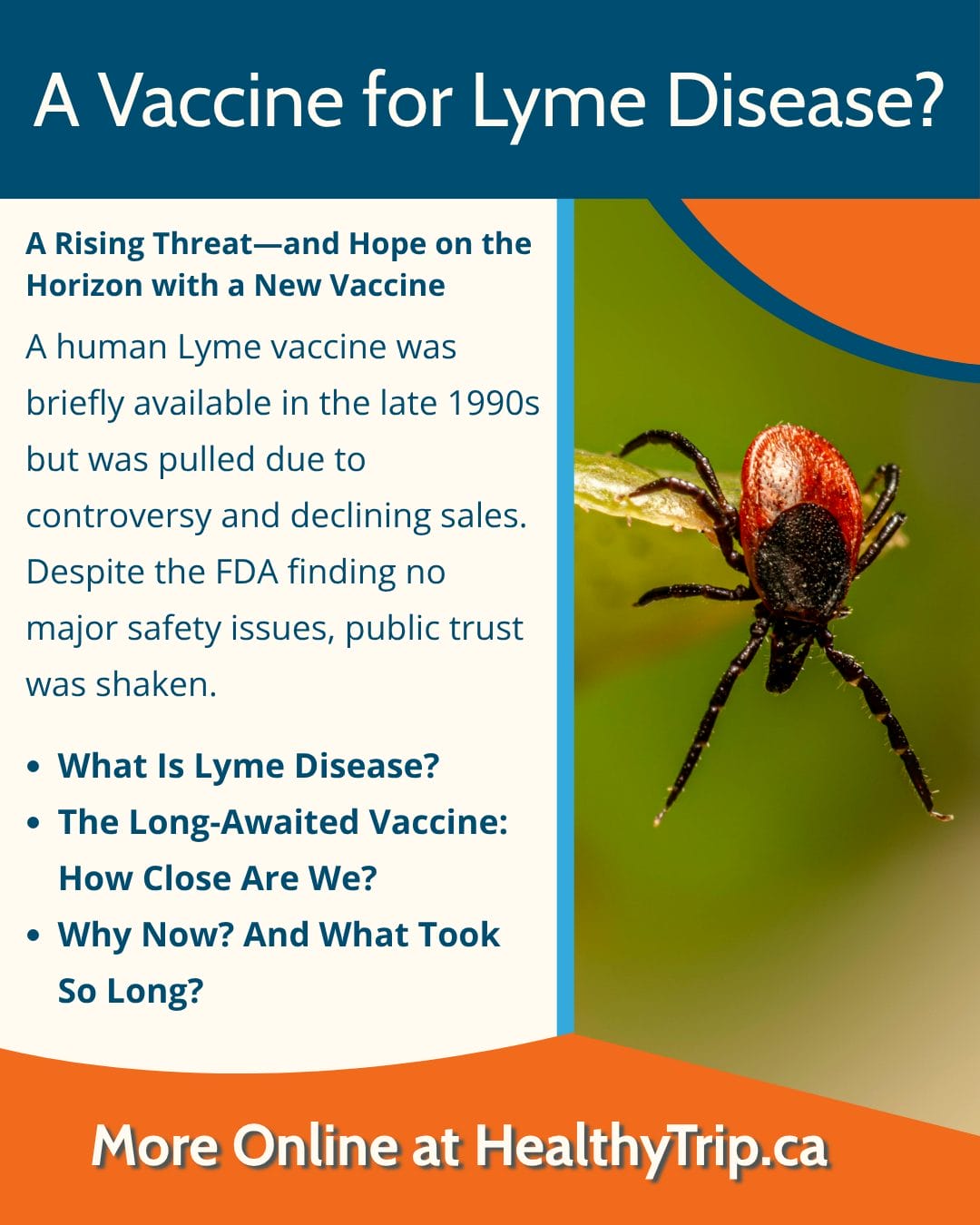
Lyme Disease in Canada: A Rising Threat—and Hope on the Horizon With a New Vaccine
At Destinations Travel and Immunization Clinic, we specialize in protecting you before, during, and after your travel—and that increasingly includes protecting you from risks right here at home. One such risk is Lyme disease, a growing public health concern across Canada due to the expanding presence of blacklegged ticks.
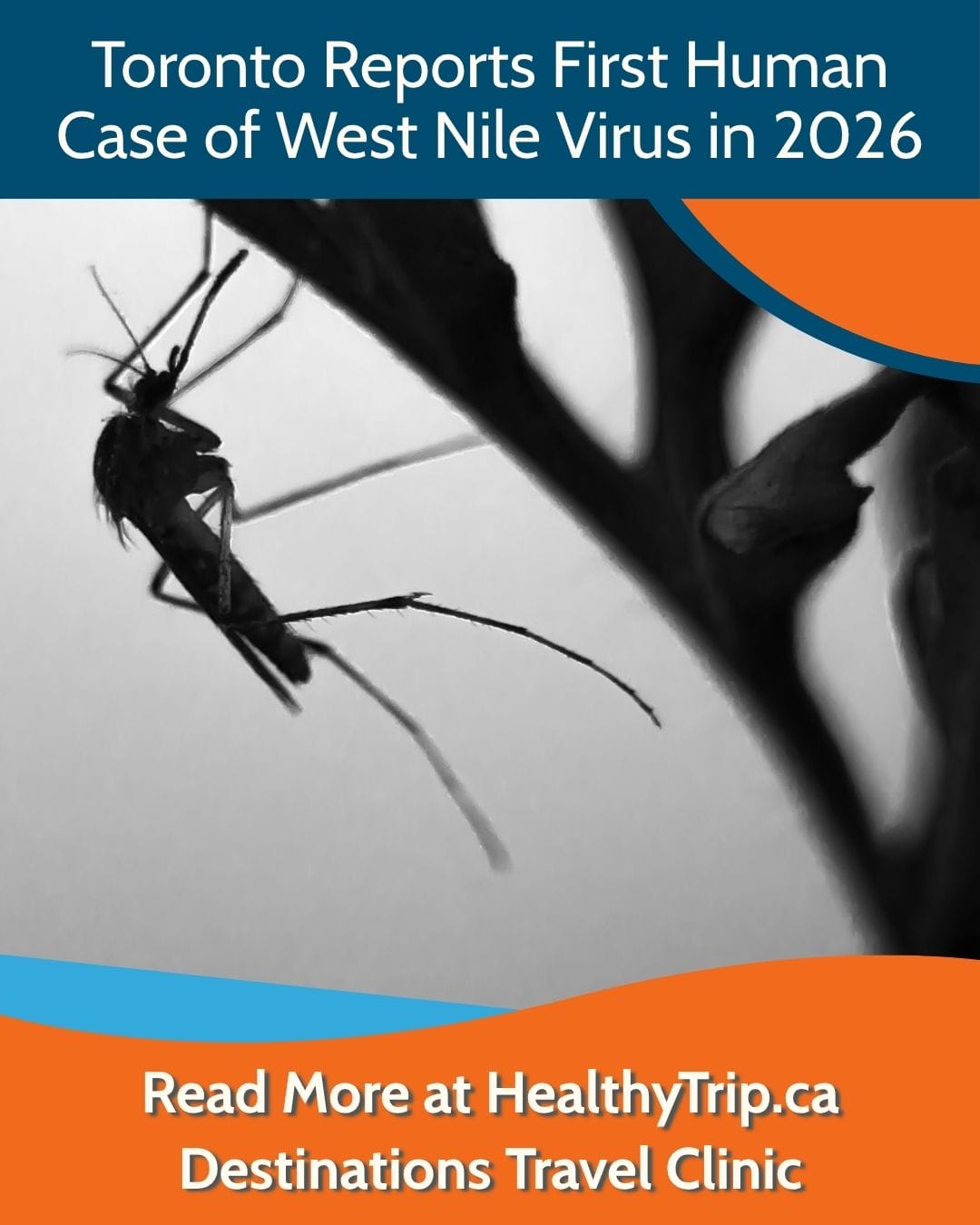
(more…)Toronto Reports First Human Case of West Nile Virus in 2026: What Travellers Need to Know
Toronto Public Health has confirmed the city’s first human case of West Nile virus for 2026. The case involves an adult resident and follows the detection of West Nile virus-positive mosquito pools in several Ontario regions, including Toronto, York Region, Halton, Belleville, and Windsor-Essex.
(more…)A Preventable Travel Disease Changed One Canadian Woman’s Life Forever: Why Japanese Encephalitis Vaccination Matters
A British Columbia woman’s devastating experience with Japanese encephalitis (JE) is serving as a sobering reminder that some travel-related infections, while uncommon, can have catastrophic lifelong consequences. What began as a once-in-a-lifetime backpacking trip through Southeast Asia became a years-long neurological recovery journey after a mosquito-borne virus attacked her brain.
(more…)How Turkey Vultures Help Control Rabies in Ontario and Around the World
Nature has its own disease management system, and one of its most underappreciated players is a bird most people would rather not think about: the turkey vulture.
These large, red-headed scavengers are a common sight soaring over Ontario fields and forests, and their role in keeping our ecosystems, and our communities, healthy is remarkable. Including when it comes to rabies.
(more…)Of all the creatures on Earth, one insect is responsible for the most human deaths.
The animal kingdom is full of deadly weapons. A lion’s teeth can rip apart flesh with ferocious intensity, rattlesnakes can inject toxins into the bloodstream and hippos can kill you with their powerful jaws.
These are just a few examples of deadly creatures. But which animal kills the most humans?
(more…)Mosquitoes on the Move: How Climate Change Is Transforming Global Travel Health Risks
By Sherilyn Houle (expanded with additional research and commentary by Destinations Travel Clinic)
Climate change is no longer a distant environmental issue — it’s an urgent global health concern that’s reshaping the landscape of infectious diseases and travel medicine. Rising temperatures, shifting rainfall patterns, and expanding habitats for insects are accelerating the spread of vector-borne diseases such as malaria, dengue, chikungunya, yellow fever, Japanese encephalitis, Zika virus, West Nile virus, and Lyme disease.
Buzz Off, Mosquitoes! Protecting Your Health at Home and Abroad
Warm weather and sunny skies mean more time outdoors — whether you’re relaxing in your backyard or jetting off on a tropical escape. But with the return of mosquito season comes a rise in the risk of mosquito-borne diseases, both in Ottawa and around the world.
First West Nile Virus-Positive Mosquitoes Detected in Ottawa This Year – Here’s How to Stay Safe
Ottawa Public Health (OPH) has confirmed the first positive mosquito pool for West Nile virus (WNV) this year. While no human cases have been reported in Ottawa so far, the detection serves as a reminder: mosquito season is not over until the first hard frost.
Hepatitis: What Travellers Need to Know Before You Fly
As World Hepatitis Day (July 28) approaches, it’s a good time to clear up common misconceptions about hepatitis—and to highlight how travellers can protect themselves before heading abroad. At Destinations Travel & Immunization Clinic, we often see individuals unaware of the risks hepatitis poses during international travel, particularly in regions where sanitation and water quality may be compromised.
Protect Yourself from Mosquito-Borne Diseases: Essential Tips from Ottawa Public Health
Ottawa residents are urged by Ottawa Public Health (OPH) to take precautions against mosquito bites, as mosquito-borne diseases like Eastern Equine Encephalitis Virus (EEEV) and West Nile Virus (WNV) are both known to circulate in the Ottawa area each mosquito season. Both of these serious diseases are spread to humans through mosquito bites, making prevention key to safeguarding your health.
(more…)