

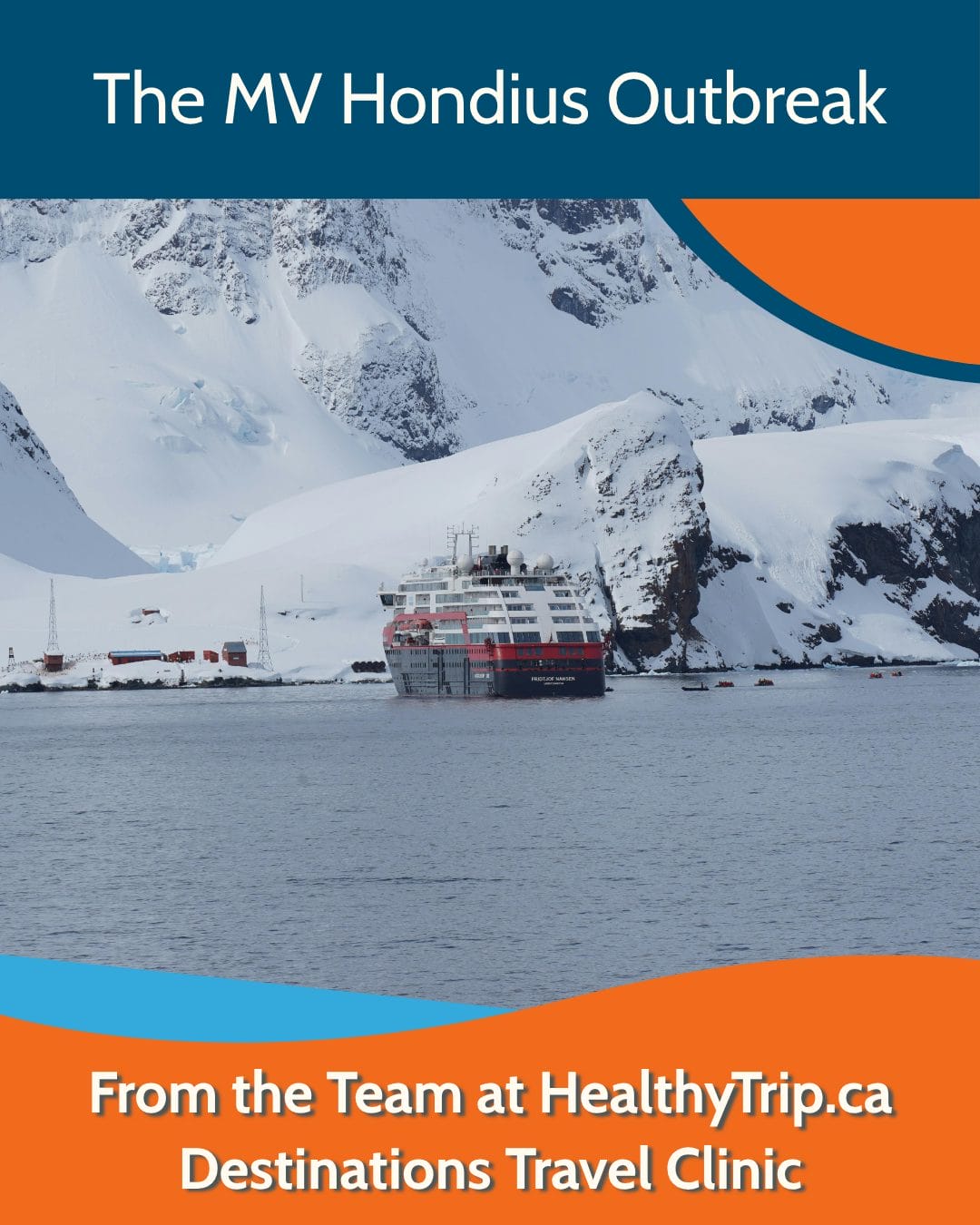
As of early May 2026, international health authorities, including the World Health Organization (WHO) and the Public Health Agency of Canada (PHAC), are closely monitoring a cluster of Hantavirus cases linked to the cruise ship MV Hondius. With four Canadians confirmed among the passengers and a reported case already receiving treatment in Switzerland, this situation highlights the complex intersection of travel medicine, zoonotic disease, and the rare but critical potential for human-to-human transmission.
The Current Situation: A Timeline of Exposure
The MV Hondius departed Ushuaia, Argentina, on April 1, 2026, for an expedition through the South Atlantic. The first fatality occurred on April 11, involving a Dutch passenger who presented with rapid respiratory failure. Following disembarkation at Saint Helena on April 24, several other passengers and crew members developed similar symptoms.
Currently, at least eight cases have been identified—including three deaths—with clinical presentations characterized by fever, gastrointestinal distress, and a swift progression to Hantavirus Pulmonary Syndrome (HPS).
Clinical Nuance: Why the “Andes” Strain Matters
While most Hantaviruses in North America (such as the Sin Nombre virus) are transmitted exclusively via contact with infected rodent excreta, the strain suspected in this outbreak—the Andes virus (ANDV)—is unique. Endemic to regions in Argentina and Chile, ANDV is the only known Hantavirus strain capable of person-to-person transmission.
This clinical distinction is vital for healthcare providers and travelers alike. In a confined maritime environment, the risk shifts from purely environmental exposure (rodent droppings in cabins or during shore excursions) to potential contact-based transmission between symptomatic individuals.
Symptoms and Disease Progression
HPS is a severe, sometimes fatal, respiratory disease. The incubation period typically ranges from 1 to 8 weeks, making post-travel surveillance essential for anyone on recent South Atlantic itineraries.
- Early Phase: Fever, severe muscle aches (myalgia), fatigue, and occasionally gastrointestinal symptoms (nausea, vomiting, diarrhea).
- Late Phase (Cardiopulmonary): 4 to 10 days after the initial phase, patients develop a sudden onset of shortness of breath (dyspnea) and coughing as the lungs fill with fluid. This can rapidly lead to respiratory failure and shock.
The Canadian Context and Public Health Response
The risk to the general Canadian public remains low. Hantavirus is not spread through casual social contact or through the air in the same manner as influenza or COVID-19. However, for the Canadians currently on board or those who recently disembarked, PHAC is coordinating with international partners to ensure rigorous contact tracing and clinical monitoring.
There is currently no vaccine or specific antiviral treatment for Hantavirus. Management relies on early recognition and intensive supportive care, including oxygen therapy and mechanical ventilation.
Moving Forward This outbreak serves as a reminder of the necessity for “One Health” surveillance—understanding how wildlife, environment, and human travel patterns converge. Travelers to South America are advised to avoid contact with rodents and to seek immediate medical attention if fever or respiratory symptoms develop within two months of their return.
Stay Connected with Destinations Travel and Immunization Clinic! healthytrip.ca/travel-blog
Because Your Health Doesn’t Take a Vacation — Even When You Do.
If you found this article helpful, don’t forget to like, share, and Follow to stay up to date on our latest travel health tips, updates, and wellness advice.
The medical information on this site is provided as an information resource only and is not to be used or relied on for any diagnostic or treatment purposes. This information does not substitute for professional diagnosis and treatment. Please do not initiate, modify, or discontinue any treatment, medication, or supplement solely based on this information. Always seek the advice of your health care provider first. Full Disclaimer