


History is often tastier in our imagination than it was in reality. While we might romanticize the Victorian era for its innovations, the birth of the commercial ice cream industry serves as a sobering reminder of why modern public health regulations are non-negotiable. At the center of this story is the “penny lick”—a small, deceptive glass vessel that helped fuel some of the 19th century’s most devastating outbreaks.
The Illusion of Abundance
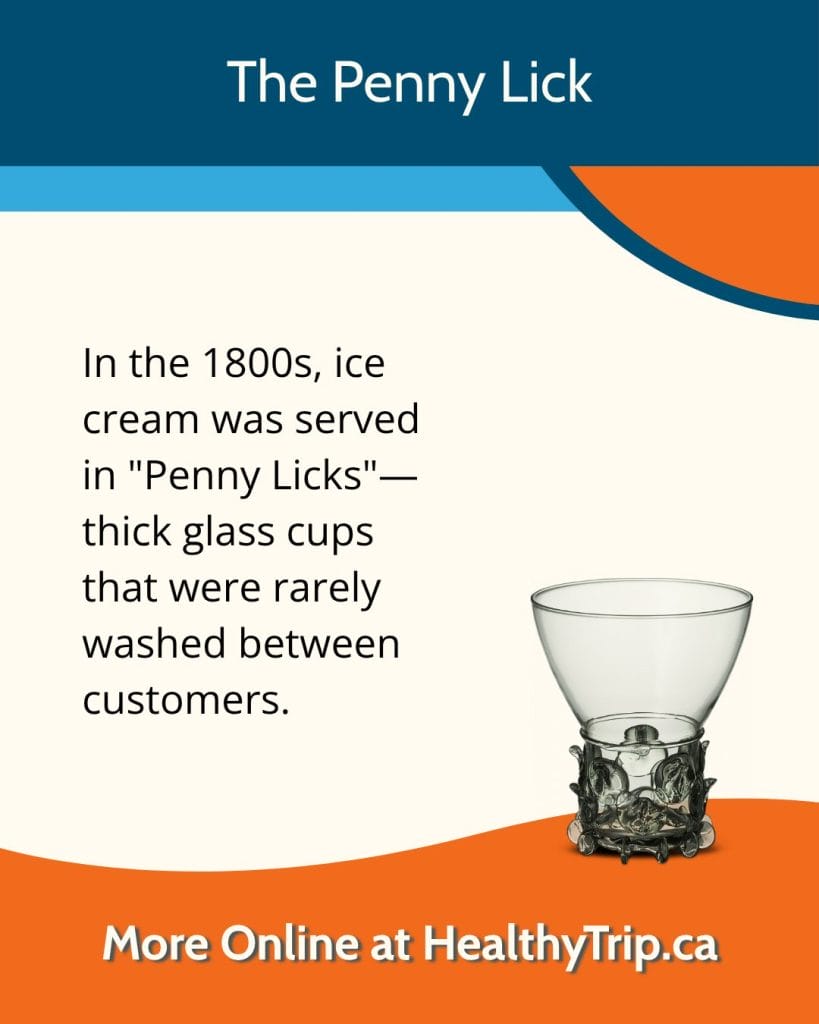
In the mid-1800s, ice cream transitioned from an elite delicacy to a street-food staple in England. Street vendors, known as “Jacks,” sold scoops for a single penny. To make the portion appear larger, vendors used “penny licks”: thick-bottomed glasses designed with a shallow depression. While the customer felt they were getting a bargain, they were actually consuming a tiny amount of ice cream from a vessel designed for deception.
However, the real cost wasn’t the lack of ice cream—it was the lack of hygiene.
A Vector for Infection: From Cholera to Tuberculosis
The penny lick was a nightmare for infectious disease control. In an era where “germ theory” was still gaining a foothold against the “miasma” theory (the belief that “bad air” caused disease), the mechanics of food safety were dangerously primitive.
When a customer finished their treat, they returned the glass to the vendor. The vendor would then:
- Give the glass a cursory rinse in a bucket of (often stagnant) water.
- Wipe it with a communal rag.
- Refill it for the next customer.
The narrow, conical shape of the penny lick made it virtually impossible to thoroughly sanitize the bottom of the glass. Consequently, these vessels became ideal breeding grounds for Mycobacterium tuberculosis (TB) and Vibrio cholerae (Cholera). An 1879 English medical report explicitly linked a cholera outbreak to the reuse of these glasses, marking a pivotal moment where medical authorities began to recognize the “shared cup” as a public health crisis.
The Canadian Parallel: The End of the “Common Cup”
While the penny lick was a British phenomenon, the public health implications resonated across the Atlantic. In Canada, a similar battle was being waged against the “common cup” found at public water fountains and in schools.
By the late 1890s, the medical community’s understanding of TB transmission became more sophisticated. Public health advocates began pushing for single-use containers or more rigorous sterilization processes. London finally banned the penny lick in 1899, though it took until the 1920s and 30s for the ban to become truly universal.
Innovation Through Necessity: The Rise of the Waffle Cone
The demise of the penny lick paved the way for a revolutionary, edible, and hygienic solution: the waffle cone. Popularized in the early 20th century, the cone removed the need for a reusable vessel entirely. It was the ultimate “single-use” safety measure—one that we still enjoy today, though we rarely think of it as a medical intervention.
Why This History Matters Today
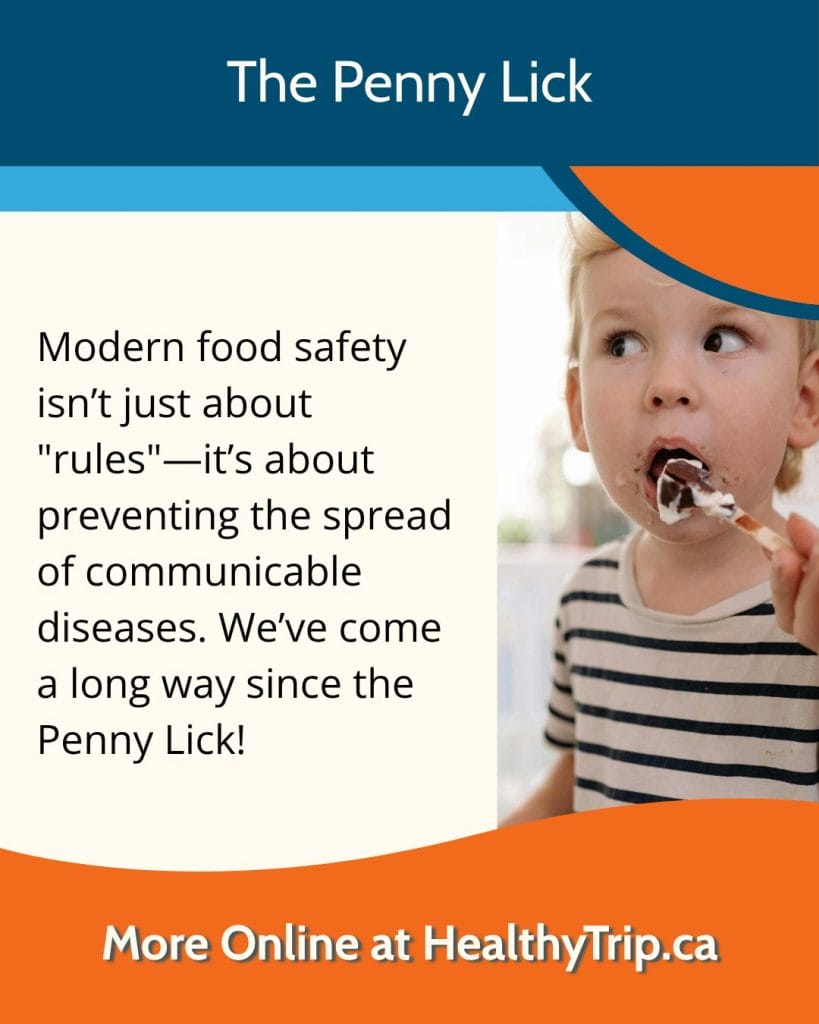
The story of the penny lick isn’t just a “gross” historical anecdote; it illustrates the fundamental goals of healthcare advocacy:
- Access vs. Safety: Ensuring that affordable food and services do not come at the cost of physical well-being.
- Evidence-Based Regulation: The transition from the 1879 medical report to the 1899 ban shows the slow but necessary integration of clinical evidence into public policy.
- Infrastructure: The penny lick persisted because vendors lacked access to clean, running water—reminding us that health outcomes are always tied to the quality of our infrastructure.
Today, we take for granted the standardized sanitation protocols in our food industry, but those standards were bought with the lessons learned from the “super gross” history of the penny lick.
Stay Connected with Destinations Travel and Immunization Clinic! healthytrip.ca/travel-blog
Because Your Health Doesn’t Take a Vacation — Even When You Do.
If you found this article helpful, don’t forget to like, share, and Follow to stay up to date on our latest travel health tips, updates, and wellness advice.
The medical information on this site is provided as an information resource only and is not to be used or relied on for any diagnostic or treatment purposes. This information does not substitute for professional diagnosis and treatment. Please do not initiate, modify, or discontinue any treatment, medication, or supplement solely based on this information. Always seek the advice of your health care provider first. Full Disclaimer