

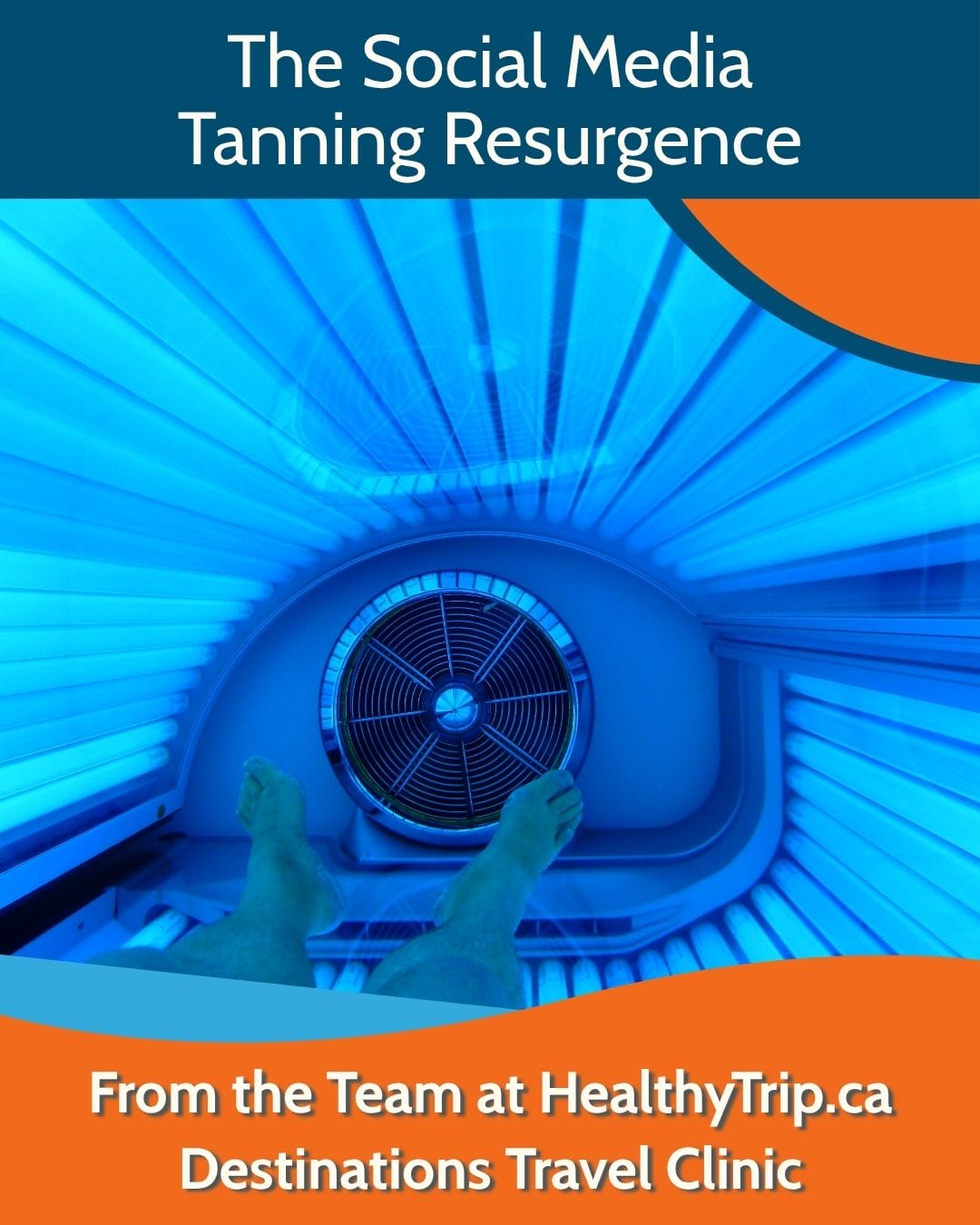
A troubling trend has re-emerged across social media platforms: the revitalization of tanning culture. Fueled by viral videos, beauty myths, and a “live in the moment” mindset, many young adults are prioritizing short-term aesthetic goals over long-term health. Unprotected sun exposure and indoor tanning beds are increasingly framed as harmless lifestyle choices or even wellness habits.
However, from a medical standpoint, there is no such thing as a safe tan — and understanding the cellular reality of UV exposure is critical for long-term health and skin protection, whether you’re at home or heading somewhere sunnier for your next trip.
The Cellular Reality: What UV Light Actually Does
A tan is not a sign of vitality; it is an active defense mechanism. When your skin is exposed to ultraviolet (UV) radiation, it attempts to protect itself from further damage by producing melanin, the pigment responsible for darkening the skin. A tan is evidence that cellular injury has already occurred.
Recent clinical research highlights the profound cellular impact of UV exposure, particularly from tanning beds, which can emit up to 10 times the UV radiation of natural sunlight:
- Accelerated DNA mutation. UV light damages the DNA sequences within melanocytes; the pigment-producing cells that can develop into moles or melanoma. Research demonstrates that individuals who use indoor tanning beds experience more than double the DNA mutation rate in these cells compared to non-users.
- Cellular “priming.” It takes only a few specific genetic mutations to transition a healthy melanocyte into a malignant melanoma cell. Excessive UV exposure effectively “primes” these cells, moving them significantly closer to oncogenesis.
- Multiplied risk. Studies show that individuals using tanning beds face nearly three times the risk of developing melanoma compared to non-users. Furthermore, using indoor tanning beds before age 20 increases melanoma risk by 47%.
Dispelling Common Tanning Myths
Addressing the resurgence of tanning requires dismantling widespread misconceptions circulating online:
- Myth: A “base tan” protects your skin. Fact: A base tan provides minimal sun protection — equivalent to an SPF of roughly 2 to 3 — and does nothing to prevent deep cellular DNA damage or long-term skin cancer risk.
- Myth: Indoor tanning boosts health responsibly. Fact: The World Health Organization classifies indoor tanning devices as Group 1 carcinogens — placing them in the same risk category as tobacco and asbestos.
- Myth: Sunscreen is more harmful than sun exposure. Fact: Regulatory-approved sunscreens undergo rigorous safety evaluations. Evidence-based medicine consistently demonstrates that broad-spectrum sunscreen safely blocks harmful UV radiation without increasing cancer risk.
Navigating Prevention and Family Health
Addressing risky health behaviors — especially among teenagers and young adults — requires clear communication focused on both immediate and long-term consequences.
- Focus on visible skin health. For younger demographics who may feel distant from long-term cancer risks, discussions emphasizing skin health, premature aging, loss of elasticity, and hyperpigmentation often resonate more effectively.
- Model evidence-based habits. Family health practices play a substantial role in shaping habits. Consistently applying broad-spectrum sunscreen (SPF 30 or higher) daily, seeking shade during peak UV hours, and avoiding intentional tanning establish strong preventive norms.
- Explore safe alternatives. For those seeking a tanned appearance, topical self-tanning products offer an aesthetic option without exposing skin cells to carcinogenic radiation.
- Prioritize regular skin surveillance. Early detection is pivotal in managing skin cancers effectively. Monitor your skin regularly for new or changing lesions using the ABCDE criteria (Asymmetry, Border irregularity, Color variation, Diameter over 6mm, Evolving shape or size), and consult a primary care provider or dermatologist if you notice suspicious changes.
Protecting your skin is not about restricting outdoor activities; it is about mitigating unnecessary risk while enjoying life safely. If your travel plans take you somewhere with much stronger UV exposure than you’re used to, a pre-travel consultation at Destinations Travel & Immunization Clinic can help you plan sun protection specific to your destination, altitude, and activities.
Stay Connected with Destinations Travel and Immunization Clinic! healthytrip.ca/travel-blog
Because Your Health Doesn’t Take a Vacation — Even When You Do.
If you found this article helpful, don’t forget to like, share, and Follow to stay up to date on our latest travel health tips, updates, and wellness advice.
The medical information on this site is provided as an information resource only and is not to be used or relied on for any diagnostic or treatment purposes. This information does not substitute for professional diagnosis and treatment. Please do not initiate, modify, or discontinue any treatment, medication, or supplement solely based on this information. Always seek the advice of your health care provider first. Full Disclaimer