

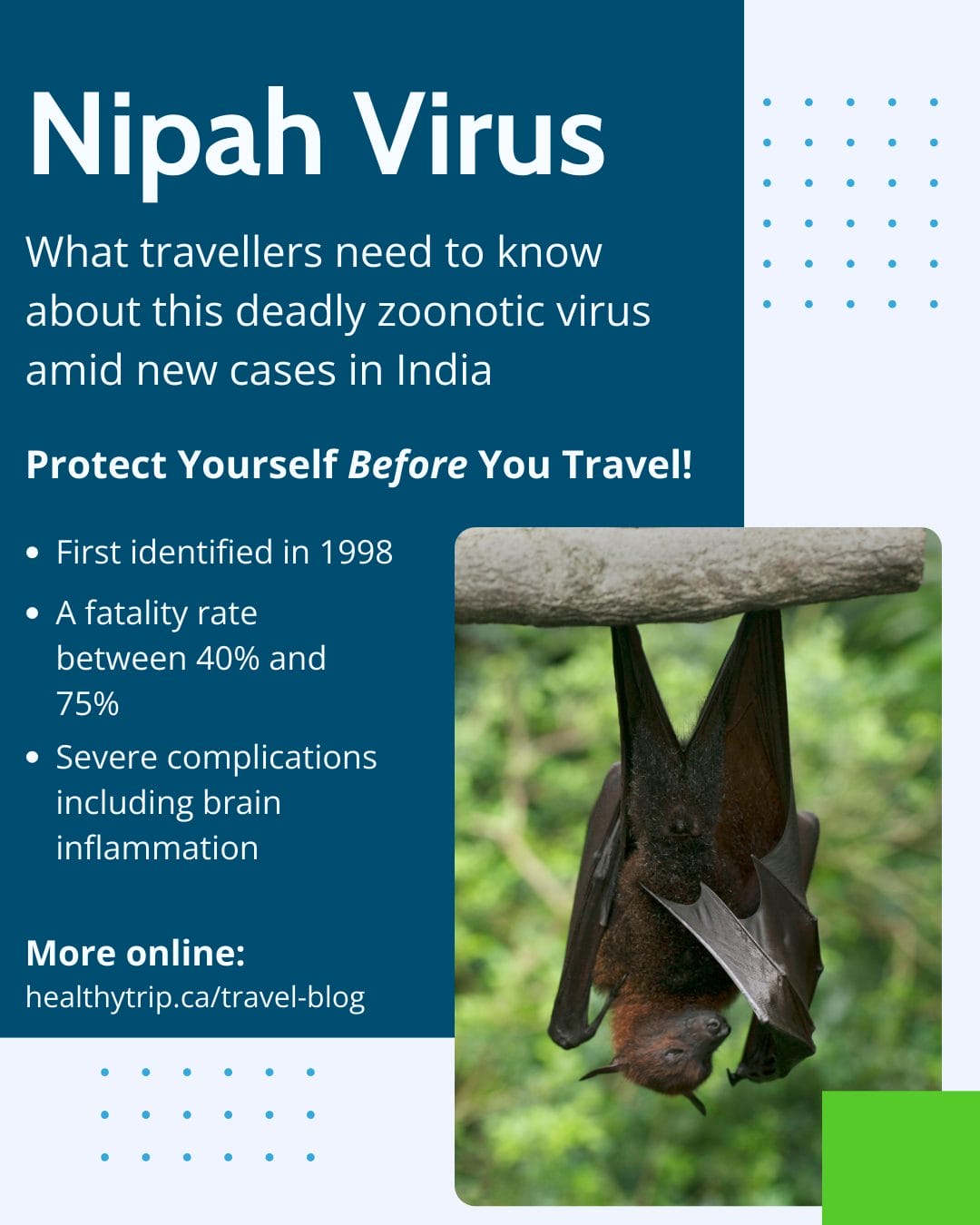
With recent confirmation of Nipah virus cases in West Bengal, India, several countries across Asia have heightened airport screening and border health measures. While the overall risk to the general travelling public remains low, Nipah virus is considered a high-priority pathogen by the World Health Organization due to its high fatality rate and lack of a licensed vaccine.
At Destinations Travel Clinic (DTC), our physician-led travel health team closely monitors emerging infectious disease threats to ensure travellers receive accurate, evidence-based guidance before departure.
What Is Nipah Virus?
Nipah virus is a zoonotic virus, meaning it spreads from animals to humans. It is most commonly carried by fruit bats (flying foxes) and can also infect animals such as pigs.
Humans may become infected through:
- Direct contact with infected animals
- Consumption of food contaminated by bats (such as fruit or raw date palm sap)
- Prolonged close contact with an infected person
While person-to-person transmission is possible, it generally requires close and sustained contact, making widespread transmission less likely than highly airborne viruses.
Why Is Nipah Virus Considered So Dangerous?
Nipah virus is associated with:
- A fatality rate between 40% and 75%
- Severe complications including brain inflammation (encephalitis)
- No approved vaccine or specific antiviral treatment
Early symptoms typically include:
- High fever
- Headache
- Muscle pain
- Nausea or vomiting
- Respiratory symptoms
In severe cases, neurological symptoms such as confusion, seizures, and reduced consciousness may develop rapidly.
Where Has Nipah Virus Been Found Before?
Nipah virus was first identified in Malaysia in 1998, primarily among pig farmers. Since then, sporadic outbreaks have occurred across South and Southeast Asia, including:
- India (particularly Kerala and West Bengal)
- Bangladesh
- Malaysia
- Singapore
- The Philippines
India regularly reports small, contained outbreaks, and public health authorities have significant experience managing these cases.
What Is Happening Now?
- Two cases were confirmed in West Bengal, India, in late December
- Nearly 200 close contacts were traced and tested, all negative
- No evidence of sustained community spread
- Countries including Singapore, Thailand, Hong Kong, Malaysia, Nepal, and Vietnam have introduced enhanced airport screening (temperature checks and health declarations)
- Experts emphasize that risk to the general population remains low
What Does This Mean for Travellers?
For most travellers:
- The risk remains low, especially for short stays and urban travel
- Screening measures are precautionary, not indicative of a widespread outbreak
- Awareness and preparation are key
Travellers should seek pre-travel medical advice if:
- Visiting rural areas
- Working in healthcare, agriculture, or animal settings
- Planning extended stays
- Travelling to regions with active surveillance or outbreaks
How Destinations Travel Clinic Helps Travellers Stay Safe
At Destinations Travel Clinic, consultations are led by physicians and nurses specialized in travel and tropical medicine, supported by pharmacists trained in travel health.
We provide:
- Individualized risk assessments based on destination and itinerary
- Education on emerging infectious diseases and prevention strategies
- Guidance on food and water safety, animal exposure, and illness recognition
- Up-to-date advice aligned with WHO and international public health agencies
Early education can make a critical difference in identifying symptoms promptly and knowing when to seek care.
Bottom Line
Nipah virus is serious but not new, and public health systems have proven effective at containing outbreaks. For travellers, informed preparation—not fear—is the most important step.
A pre-travel consultation ensures you travel with confidence, clarity, and expert medical guidance.
Book your travel health consultation with Destinations Travel Clinic before you go.
Stay Connected with Destinations Travel and Immunization Clinic!
If you found this article helpful, don’t forget to like, share, and Follow to stay up to date on our latest travel health tips, updates, and wellness advice.
And follow us on social media
Disclaimer: The medical information on this site is provided as an information resource only and is not to be used or relied upon for any diagnostic or treatment purposes. This information does not substitute for professional diagnosis and treatment. Please do not initiate, modify, or discontinue any treatment, medication, or supplement solely based on this information. Always seek the advice of your healthcare provider first. Full Disclaimer.