

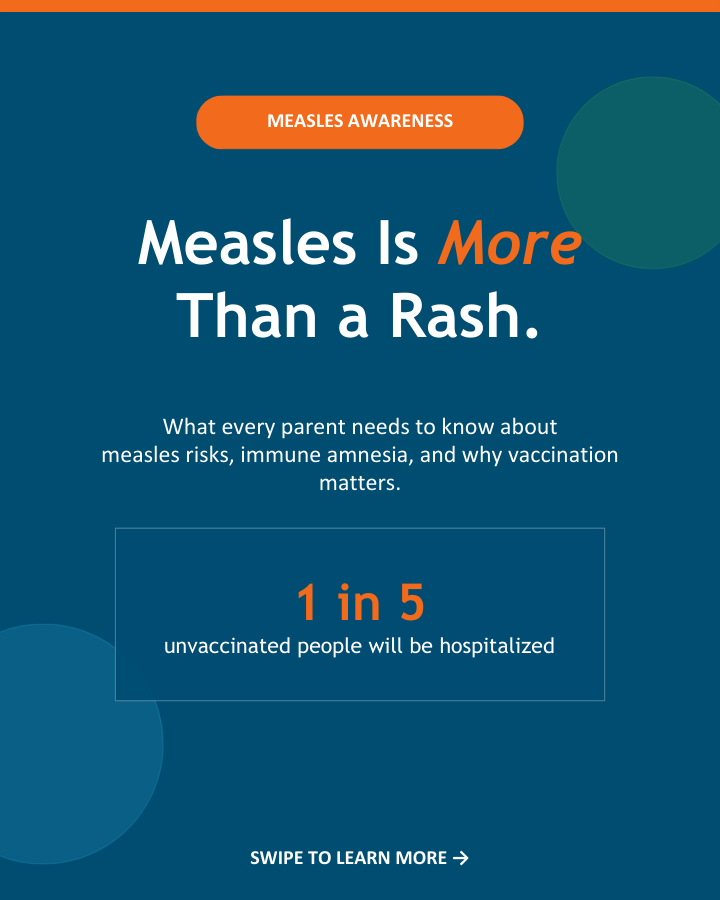
As measles cases rise across North America, most parents understand the basics: measles is highly contagious, causes a rash, and vaccination can prevent it. But what many don’t know is that measles can have long-lasting effects on a child’s immune system, leaving them vulnerable to other infections for years after the initial illness.
We spoke with Dr. Sandra Adamson Fryhofer, trustee of the American Medical Association, about the serious risks parents need to know.
Measles Is More Than a Childhood Rash
“Measles is more than a rash,” says Dr. Fryhofer. “It is an extremely contagious, airborne virus that can cause severe health complications, especially in babies and young children—including pneumonia, brain swelling, blindness, and even death.”
Statistics from the CDC highlight the risks:
- 1 in 5 unvaccinated people with measles will be hospitalized.
- 1 in 20 children may develop pneumonia, the most common cause of death in young children with measles.
- 1 in 1,000 may experience brain swelling leading to convulsions.
- 1–3 in 1,000 children with measles may die from complications.
These are not rare events—they are documented, significant risks.





The Hidden Danger: Immune Amnesia
Measles does something unique: it erases a child’s immune memory.
“Measles infects and destroys memory cells that recognize previous infections,” explains Dr. Fryhofer. “Because immune memory is wiped out, children can become vulnerable to illnesses they had already fought off or been vaccinated against.”
In practical terms, this means a child who had chickenpox or was vaccinated against other diseases could essentially ‘forget’ that protection, leaving them more susceptible to infections like pneumonia or ear infections for 2–3 years after measles infection.
Recognizing Measles
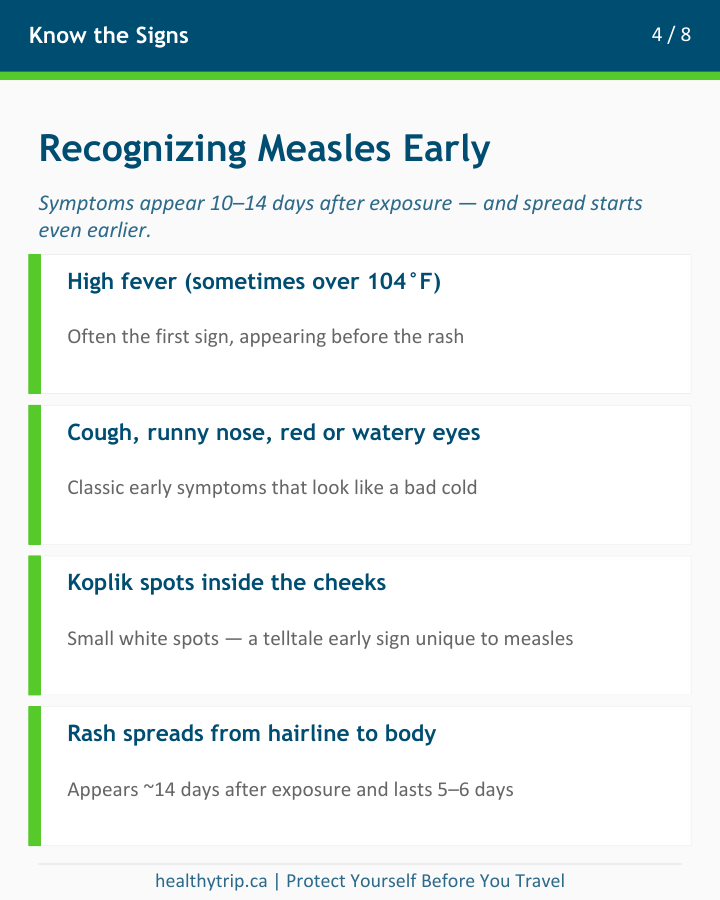
Early symptoms appear 10–14 days after exposure and include:
- High fever (sometimes over 104°F)
- Cough, runny nose, red or watery eyes
- Koplik spots (small white spots inside the cheeks)
The characteristic rash develops around 14 days post-exposure, starting at the hairline and spreading across the body, lasting 5–6 days.
Patients are contagious from 4 days before to 4 days after the rash, which means a child can spread the virus before symptoms are obvious.
When to Seek Emergency Care
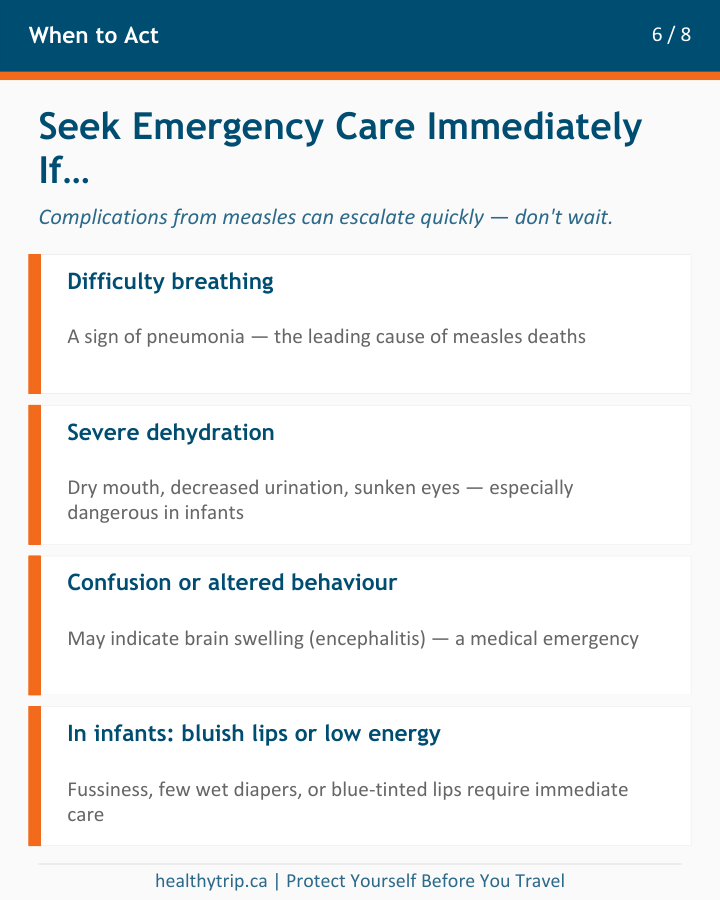
There’s no antiviral treatment for measles, so supportive care is critical. Parents should seek immediate care if a child shows:
- Difficulty breathing
- Severe dehydration (dry mouth, decreased urination)
- Confusion or altered behavior
- For infants: fussiness, low energy, decreased wet diapers, or bluish lips
Children with measles should remain isolated from others until 4 days after the rash appears or longer if immunocompromised.
Prevention Is Key: Vaccination
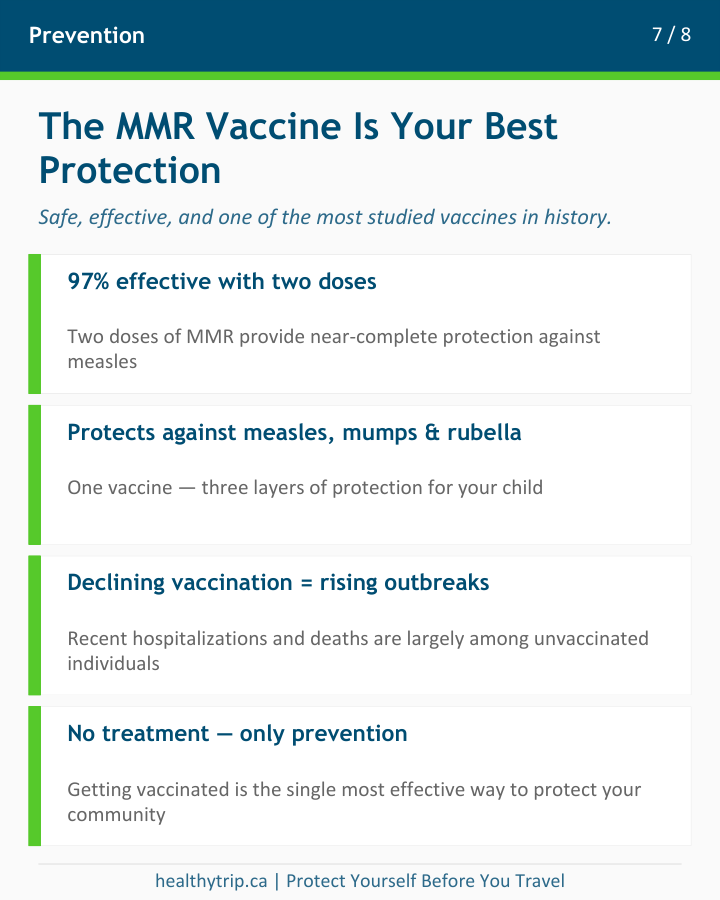
Because complications can be severe and treatment is limited, vaccination is essential.
- The MMR vaccine protects against measles, mumps, and rubella.
- Two doses are about 97% effective at preventing measles.
- Declining vaccination rates are driving recent outbreaks, hospitalizations, and preventable deaths, mostly among unvaccinated individuals.
Dr. Fryhofer emphasizes, “Getting your children vaccinated is the most effective way to protect them—and your community—from measles. There is no treatment, but vaccination offers strong protection and prevents lifelong complications.”
Bottom line: Protect your child and your community. Make sure vaccinations are up to date and speak with your healthcare provider about any questions or concerns regarding the MMR vaccine.
Stay Connected with Destinations Travel and Immunization Clinic! healthytrip.ca/travel-blog
Because Your Health Doesn’t Take a Vacation — Even When You Do.
If you found this article helpful, don’t forget to like, share, and Follow to stay up to date on our latest travel health tips, updates, and wellness advice.
The medical information on this site is provided as an information resource only and is not to be used or relied on for any diagnostic or treatment purposes. This information does not substitute for professional diagnosis and treatment. Please do not initiate, modify, or discontinue any treatment, medication, or supplement solely based on this information. Always seek the advice of your health care provider first. Full Disclaimer