

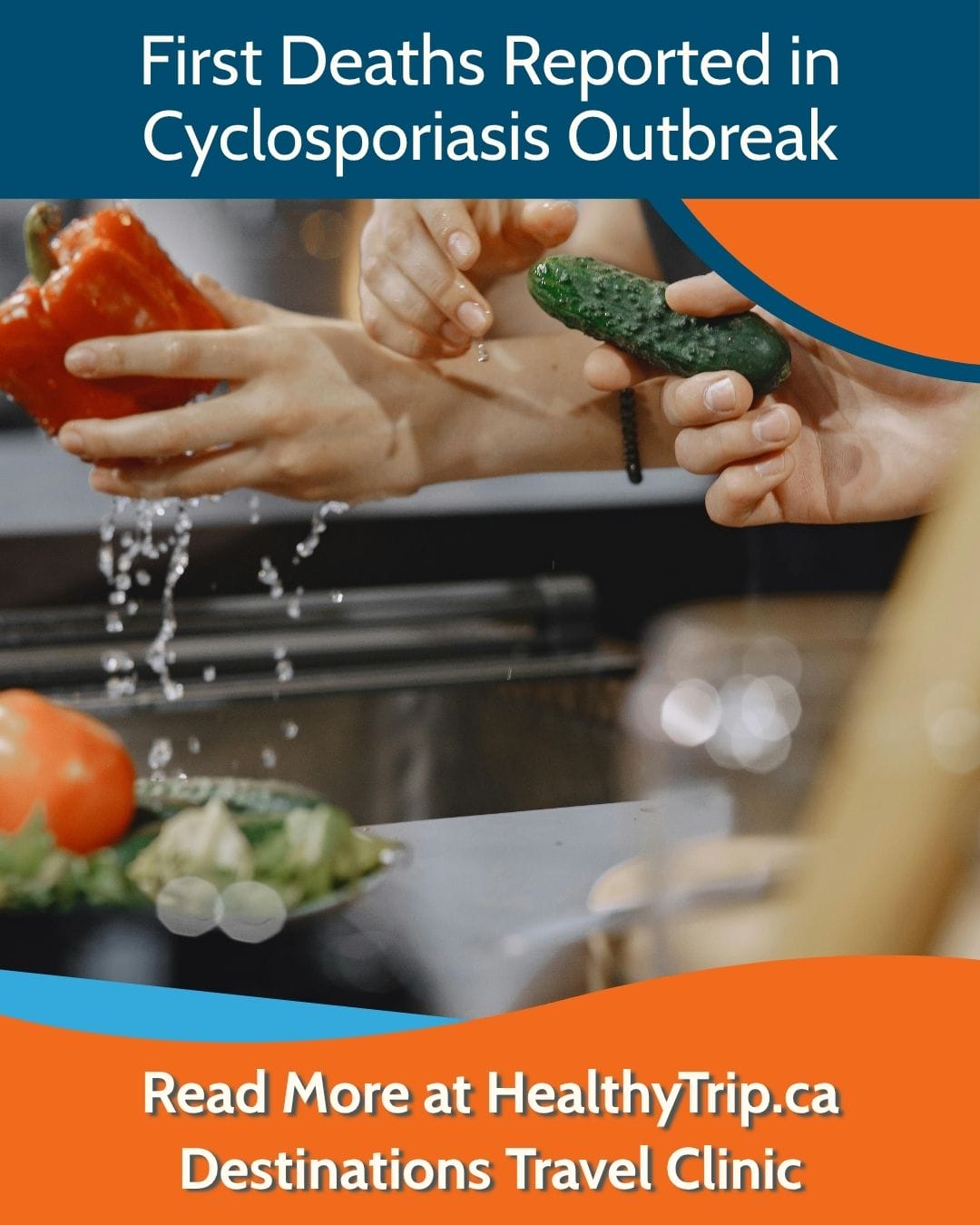
A large cyclosporiasis outbreak in the United States has resulted in the first reported deaths associated with the illness. Michigan health officials have confirmed that two individuals with significant underlying health conditions died after being affected by cyclosporiasis and dehydration.
More than 11,000 cases have been reported in Michigan alone, with hundreds requiring hospitalization. Across the United States, the CDC is monitoring over 18,000 cases during what has become an unusually severe outbreak season — a sharper escalation than Canada’s own cyclosporiasis trend this year, where cases have stayed mostly travel-linked rather than domestically acquired.
What Is Cyclosporiasis?
Cyclosporiasis is an intestinal infection caused by the microscopic parasite Cyclospora cayetanensis. People become infected by consuming contaminated food or water, particularly fresh produce that has not been adequately washed or handled.
The infection is not spread directly from person to person. Instead, contaminated food and water sources are typically responsible.
Common Symptoms
Symptoms usually develop about one week after exposure and may include:
- Severe watery diarrhea
- Frequent bowel movements
- Abdominal cramping
- Nausea
- Loss of appetite
- Fatigue
- Weight loss
- Low-grade fever
Without treatment, symptoms can persist for weeks or even months.
Why This Outbreak Matters
Most healthy individuals recover without serious complications. However, prolonged diarrhea can lead to dehydration, which can be dangerous for older adults, young children, pregnant individuals, people with weakened immune systems, and travellers with chronic medical conditions.
The recent deaths highlight the importance of seeking medical care when severe diarrhea causes dehydration or persistent symptoms.
Food Safety Tips for Travellers
Cyclospora infections are commonly associated with fresh fruits, vegetables, salads, herbs, and contaminated water.
When travelling:
- Drink bottled, boiled, or properly treated water when water quality is uncertain
- Avoid ice unless made from safe water
- Wash fruits and vegetables thoroughly
- Choose foods that are cooked and served hot
- Practice frequent hand hygiene
- Be cautious with raw salads and uncooked produce in areas with poor sanitation
Traveller’s Diarrhea and Pre-Travel Consultation
Diarrheal illnesses remain one of the most common health problems affecting international travellers.
At DTC Travel & Immunization Clinic, our travel medicine practitioners provide individualized risk assessments that include destination-specific food and water safety advice, traveller’s diarrhea prevention strategies, guidance on oral rehydration and self-treatment, assessment of underlying medical conditions that may increase risk, and recommendations for appropriate travel health supplies.
The DTC Difference
Travel health involves much more than vaccines. Understanding food-borne illnesses, water safety, parasite prevention, and destination-specific risks can help travellers avoid serious illness abroad.
Our travel medicine consultations provide evidence-based recommendations tailored to your itinerary, medical history, and planned activities. Book your pre-travel consultation before your next trip and travel with confidence.
Stay Connected with Destinations Travel and Immunization Clinic! healthytrip.ca/travel-blog
Because Your Health Doesn’t Take a Vacation — Even When You Do.
If you found this article helpful, don’t forget to like, share, and Follow to stay up to date on our latest travel health tips, updates, and wellness advice.
The medical information on this site is provided as an information resource only and is not to be used or relied on for any diagnostic or treatment purposes. This information does not substitute for professional diagnosis and treatment. Please do not initiate, modify, or discontinue any treatment, medication, or supplement solely based on this information. Always seek the advice of your health care provider first. Full Disclaimer